
-
AirMedic Pro 5 HD Air Purifier
Regular price SALE $722.98 USDRegular priceUnit price per$999.98 USDSale price SALE $722.98 USDSale -
AirMedic Pro 5 Ultra Air Purifier
Regular price SALE $892.98 USDRegular priceUnit price per$1,199.98 USDSale price SALE $892.98 USDSale -
AirMedic Pro 6 HD Air Purifier
Regular price SALE $807.98 USDRegular priceUnit price per$1,099.98 USDSale price SALE $807.98 USDSale -
AirMedic Pro 6 Ultra Air Purifier
Regular price SALE $934.98 USDRegular priceUnit price per$1,299.98 USDSale price SALE $934.98 USDSale


Our Chemical and Odor Air Purifiers: Select by Filtration Depth and Unit Size
Best Air Purifiers for Chemicals & VOCs
-

Remove Airborne Chemicals & Odors
The deepest activated carbon filters in the industry to remove the chemicals and odors that can irritate sensitive lungs.
-

Special Carbon Blends
Dealing with VOCs or specific chemicals or odors? Choose our special Vocarb carbon blend or call for a recommendation.
-

Easy to Maintain
Robust industrial design for reliable, continuous 24/7 operation. Change pre-filters in seconds with no tools.


How does an AllerAir air purifier work?
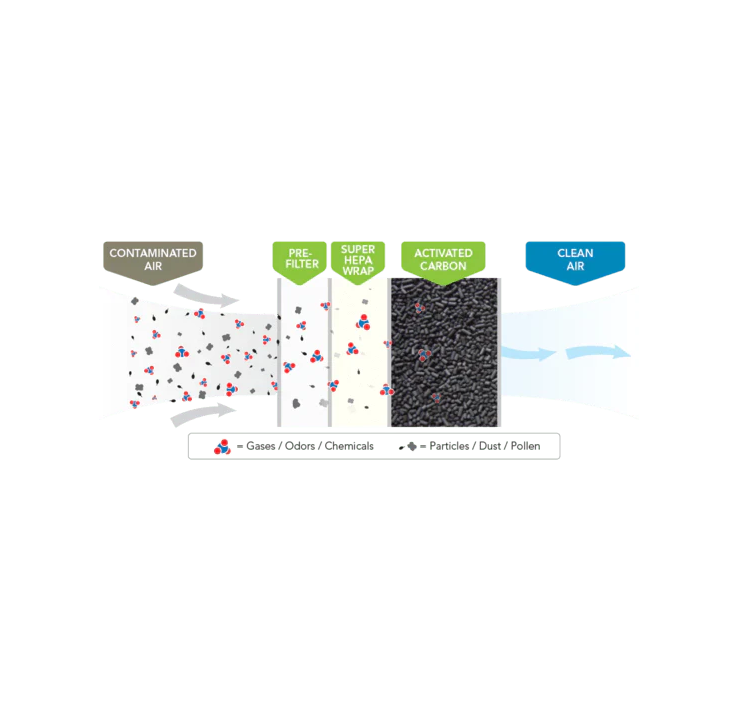
An AllerAir air purifier cleans your indoor air in several steps:
- A pre-filter removes larger particles
- The HEPA traps 99.97% of fine airborne particles
- The deep-bed activated carbon filter adsorbs airborne chemicals, gases and odors
Activated carbon works like a sponge to soak up airborne chemicals, gases and odors. The capacity of that “sponge” depends on its depth and size. The more activated carbon used in an air purifier, the more chemicals, gases and odors it can adsorb.

Why you need carbon for chemicals & odors
Most air purifiers are designed for dust removal. They're equipped with HEPA filters which can't remove airborne chemicals, gases and odors. To remove these types of pollutants you need special filtration with a significant depth.
AllerAir's deep-bed activated carbon filters attract and trap chemicals and odors safely and effectively and remove a wide range of chemicals and odors including VOCs, formaldehyde, benzene, common household odors, pet odors and more.
How does activated carbon work?
Used on the world’s most hazardous airborne pollutants, activated carbon is one of the safest and most effective filtration methods in use today.
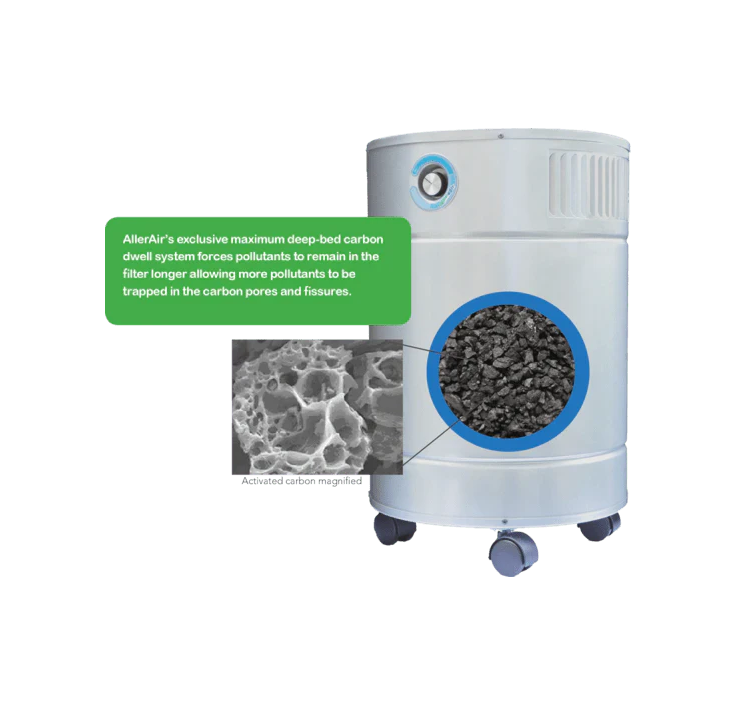
Activated carbon actually attracts pollutants and traps them in millions of tiny pores and fissures. The surface area in activated carbon is so extensive, that if you could spread out all of the microscopic openings found in only one teaspoon of activated carbon, it would cover an entire football field. This unique quality allows carbon remove very large amounts of chemicals, gases and odors.
Filters with only a small amount of carbon or carbon dust sprayed onto mesh won't have as many openings for pollutants to be trapped and can quickly be saturated. This results in most frequent filter changes and ineffective filtration.
AllerAir filter last on average 2 to 5 years, depending on the pollution level.
Recent posts from clean air news
-
Best Air Purifiers for Wildfire VOCs
The Los Angeles Wildfires that swept through Southern California, The Palisades Fire in Pacific Palisades and Eaton Fire in Altadena are one of the worst natural disasters in California history....
Best Air Purifiers for Wildfire VOCs
The Los Angeles Wildfires that swept through Southern California, The Palisades Fire in Pacific Palisades and Eaton Fire in Altadena are one of the worst natural disasters in California history....
-
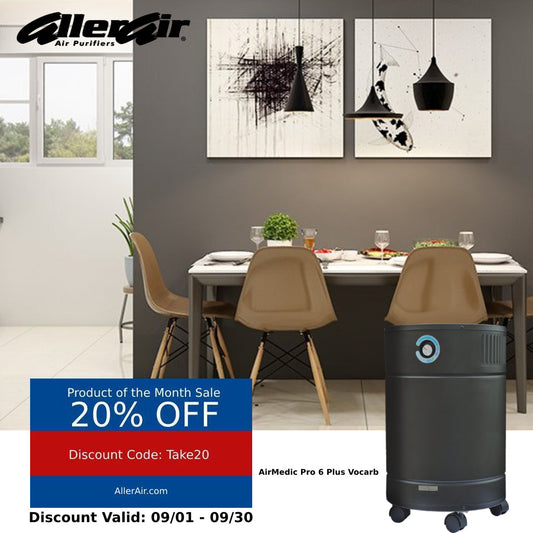
Product of the Month: AirMedic Pro 6 Plus Vocar...
The AllerAir AirMedic Pro 6 Plus Vocarb air purifier is the flag ship model of the legacy 6000 series Air Purifier, formerly known as the 6000 D Vocarb unit. The AirMedic Pro 6 Plus...
Product of the Month: AirMedic Pro 6 Plus Vocar...
The AllerAir AirMedic Pro 6 Plus Vocarb air purifier is the flag ship model of the legacy 6000 series Air Purifier, formerly known as the 6000 D Vocarb unit. The AirMedic Pro 6 Plus...
-
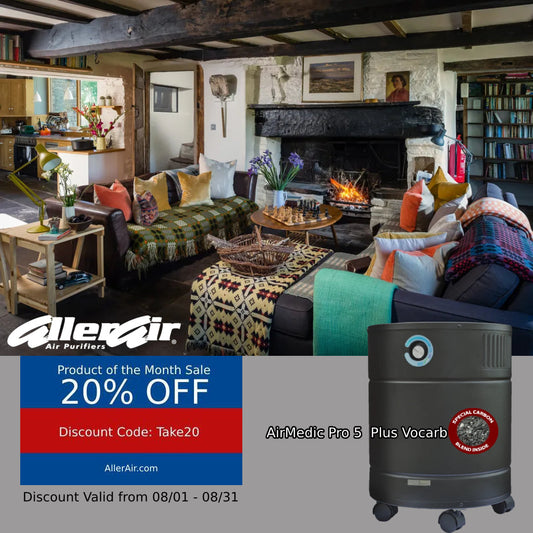
Product of the Month: AirMedic Pro 5 Plus Vocar...
The AllerAir AirMedic Pro 5 Plus Vocarb air purifier is the flag ship model of all AllerAir Air Purifiers formerly known as the 5000 D Vocarb unit. The AirMedic Pro...
Product of the Month: AirMedic Pro 5 Plus Vocar...
The AllerAir AirMedic Pro 5 Plus Vocarb air purifier is the flag ship model of all AllerAir Air Purifiers formerly known as the 5000 D Vocarb unit. The AirMedic Pro...
-
Product of the Month: AirMedic Pro 6 HDS Smoke ...
The AirMedic Pro 6 HDS Smoke Air Cleaner is a high end air purifier designed and manufactured to filter smoke and harmful VOCs from wildfires. The Pro 6 HDS unit comes...
Product of the Month: AirMedic Pro 6 HDS Smoke ...
The AirMedic Pro 6 HDS Smoke Air Cleaner is a high end air purifier designed and manufactured to filter smoke and harmful VOCs from wildfires. The Pro 6 HDS unit comes...
Air Purifiers for Chemicals & Odors
Remove VOCs, chemicals, and odors that other air purifiers leave behind with AllerAir's activated carbon and HEPA filtration system.
Best Air Purifiers for Chemicals & VOCs
Remove Airborne Chemicals & Odors
The deepest activated carbon filters in the industry to remove the chemicals and odors that can irritate sensitive lungs.
Special Carbon Blends
Dealing with VOCs or specific chemicals or odors? Choose our special Vocarb carbon blend or call for a recommendation.
Easy to Maintain
Robust industrial design for reliable, continuous 24/7 operation. Change pre-filters in seconds with no tools.
Our Chemical and Odor Air Purifiers: Select by Filtration Depth and Unit Size
- Extra deep-bed industrial activated carbon filters remove more of the pollutants that other air cleaners leave behind
- Vocarb activated carbon blend for heavier pollutants
- Super HEPA filter that removes up to 99.99% of fine particles
- A robust industrial design allows for 24/7operation. No digital parts to set or repair, just a simple plug and play design for worry-free operation.
- UV filtration available for the enhanced filtration of airborne viruses and bacteria
How does an AllerAir air purifier work?
An AllerAir air purifier cleans your indoor air in several steps:
• A pre-filter removes larger particles
• The HEPA traps 99.97% of fine airborne particles
• The deep-bed activated carbon filter adsorbs airborne chemicals, gases and odors
Activated carbon works like a sponge to soak up airborne chemicals, gases and odors. The capacity of that “sponge” depends on its depth and size. The more activated carbon used in an air purifier, the more chemicals, gases and odors it can adsorb.


Why you need carbon for chemicals & odors
Most air purifiers are designed for dust removal. They're equipped with HEPA filters which can't remove airborne chemicals, gases and odors. To remove these types of pollutants you need special filtration with a significant depth.
AllerAir's deep-bed activated carbon filters attract and trap chemicals and odors safely and effectively and remove a wide range of chemicals and odors including VOCs, formaldehyde, benzene, common household odors, pet odors and more.
How does activated carbon work?
Used on the world’s most hazardous airborne pollutants, activated carbon is one of the safest and most effective filtration methods in use today.
Activated carbon actually attracts pollutants and traps them in millions of tiny pores and fissures. The surface area in activated carbon is so extensive, that if you could spread out all of the microscopic openings found in only one teaspoon of activated carbon, it would cover an entire football field. This unique quality allows carbon remove very large amounts of chemicals, gases and odors.
Filters with only a small amount of carbon or carbon dust sprayed onto mesh won't have as many openings for pollutants to be trapped and can quickly be saturated. This results in most frequent filter changes and ineffective filtration.
AllerAir filter last on average 2 to 5 years, depending on the pollution level.

Recent posts from clean air news

Best Air Purifiers for Wildfire VOCs
The Los Angeles Wildfires that swept through Southern California, The Palisades Fire in Pacific Palisades and Eaton Fire in Altadena are one of the worst natural disasters in California history.

Product of the Month: AirMedic Pro 6 Plus Vocarb Air Purifier
The AllerAir AirMedic Pro 6 Plus Vocarb air purifier is the flag ship model of the legacy 6000 series Air Purifier, formerly known as the 6000 D Vocarb unit. The AirMedic Pro 6 Plus is based on the same design, with modifications done to the design to increase filtration capacity, along with a new stronger 560 CFM motor. The Pro 6 Plus air cleaner exceeds results from our legacy 6000 series air purifiers (400 CFM). The Pro 6 Plus air purifier uses the same replacement filters as the AllerAir 6000 D series air purifiers.

Product of the Month: AirMedic Pro 5 Plus Vocarb Air Purifier
The AllerAir AirMedic Pro 5 Plus Vocarb air purifier is the flag ship model of all AllerAir Air Purifiers formerly known as the 5000 D Vocarb unit. The AirMedic Pro 5 Plus is based on the same design, but with modifications done to the design to increase filtration capacity, along with a new stronger 400 CFM motor
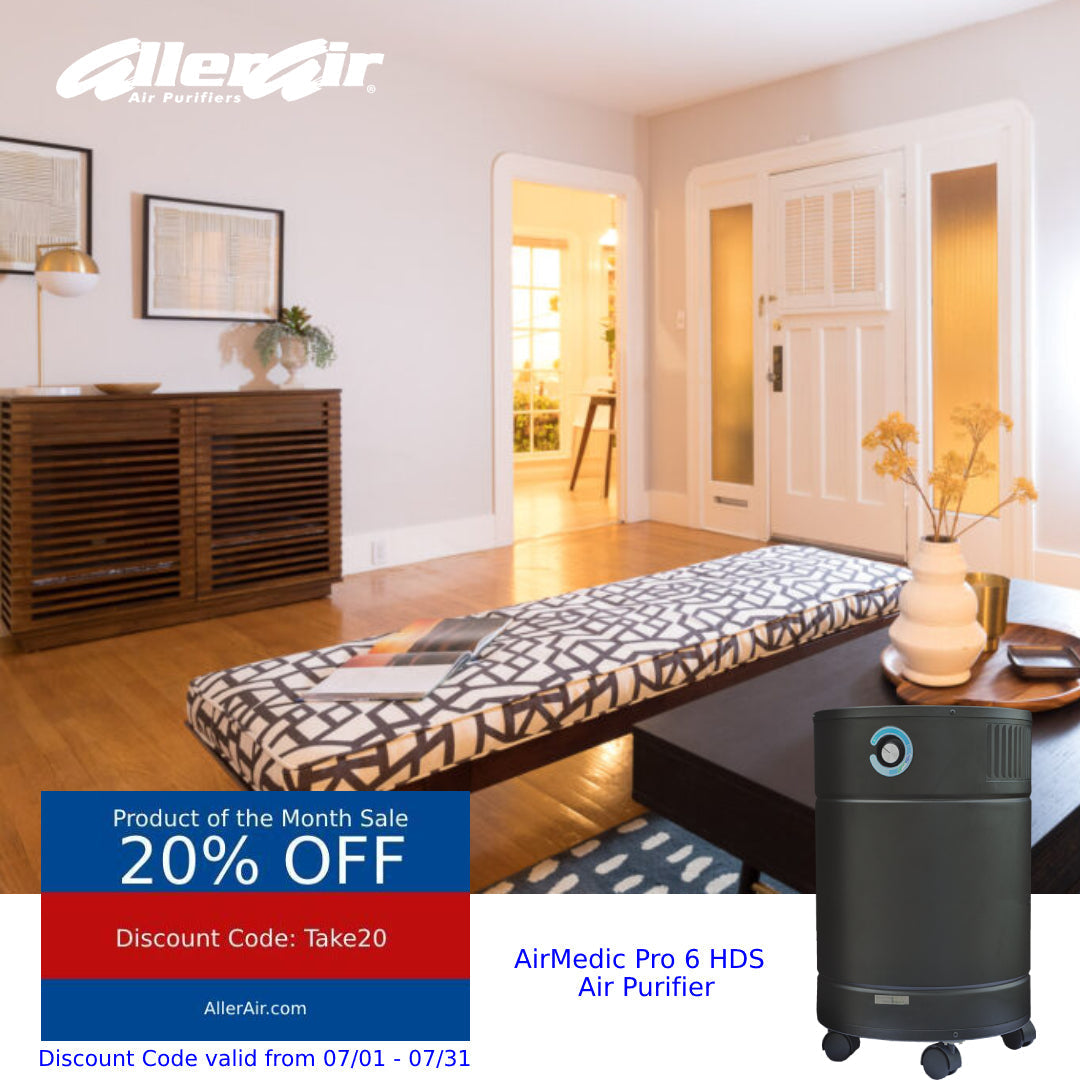
Product of the Month: AirMedic Pro 6 HDS Smoke Air Purifier
The AirMedic Pro 6 HDS Smoke Air Cleaner is a high end air purifier designed and manufactured to filter smoke and harmful VOCs from wildfires. The Pro 6 HDS unit comes with a Tar Trapping Pre-filter, Super HEPA filter (H14) Merv 18 rated, and 3.5" Thick Activated carbon filter with 29 lbs of 100% Virgin Activated Carbon.